
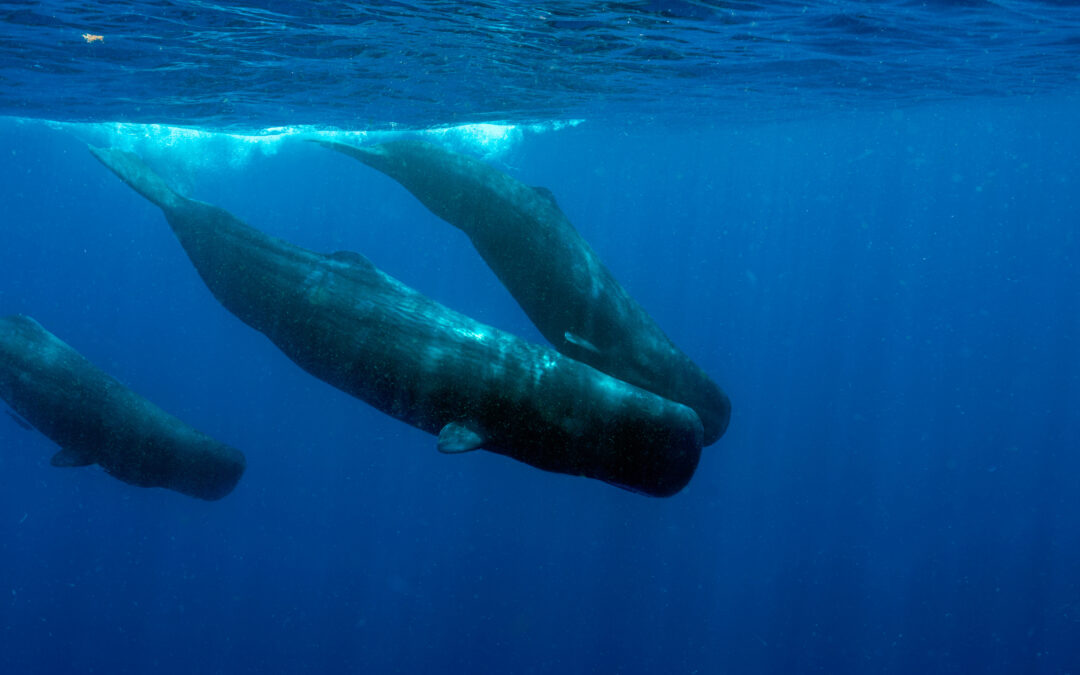
One moment, you’re scanning the horizon for signs of movement. The next, a plume of mist rises above the water, followed by the unmistakable sight of one of the largest animals on the planet.
There are few wildlife encounters quite like watching a sperm whale surface from the depths of the Caribbean Sea. And in Dominica, where deep underwater canyons provide a habitat for a resident population of sperm whales, this means an opportunity to observe these remarkable marine mammals in their natural environment.
For travellers interested in Dominica whale watching, our team at karibu adventures returns to the island again and again, working with local whale-watching operators who prioritize low-impact encounters and minimal disturbance to marine life as part of our eight-day Dominica hiking and adventure tour. And through these experiences, we’ve learned a thing or two about what makes whale watching here so special.
Whether you’re considering joining us on an upcoming adventure or planning a visit of your own, here’s everything you need to know about whale watching in Dominica, from the best time to go to how to experience these magnificent animals responsibly.
Why is Dominica one of the best places for whale watching?
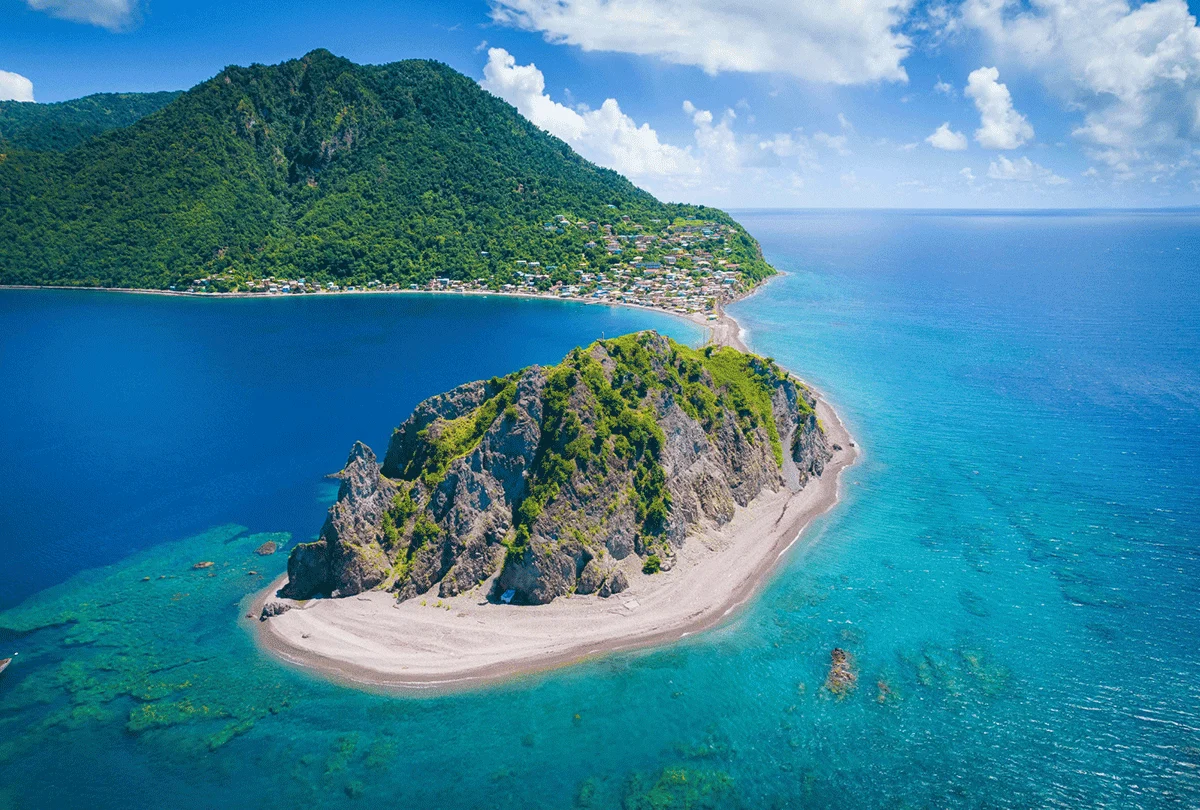
Unlike many whale-watching destinations, where sightings depend on seasonal migrations, Dominica offers a unique home to sperm whales throughout the year thanks to its secret that lies beneath the surface.
Just offshore, particularly along the island’s western coastline, the seafloor drops dramatically into deep underwater canyons. These rich waters provide access to the squid and other deep-sea prey that sperm whales rely on for food, and as a result, family groups of sperm whales regularly inhabit the waters surrounding Dominica, creating opportunities to observe them in an environment where they feed, socialize, and raise their young.
While sightings are never guaranteed, this unique underwater ecosystem has made Dominica one of the top destinations for travellers hoping to see some of nature’s most majestic creatures.
What to expect on a Dominica whale-watching tour
One of the most exciting aspects of whale watching in Dominica is that the adventure begins almost as soon as you leave shore.
Many whale-watching tours depart from the island’s western coastline, including areas around Roseau and Portsmouth, where deep water is accessible relatively close to land.
As you travel along the coast, you’ll have views of Dominica’s mountainous landscape while your captain and guides search for signs of marine life. Some operators use underwater microphones called hydrophones to listen for the clicking sounds produced by sperm whales. Because these animals spend so much of their time underwater, listening for their vocalizations can help experienced guides locate them without relying entirely on visual sightings.
How long do whale-watching tours last?
Most standard boat-based whale-watching excursions last approximately two to four hours, although duration varies by operator, sea conditions, and the location of the whales.
What happens when you spot a sperm whale?
A typical encounter might begin with a distant spout of water as a sperm whale surfaces to breathe. Because these animals can remain at the surface for several minutes between deep dives, you may have time to observe the whale’s distinctive rectangular head or catch its tail flukes rising above the surface before it descends.
Occasionally, visitors may witness other behaviours, including social interactions or breaching, when a whale propels part or all of its body out of the water.
But every encounter is different.
Sometimes the whales surface close enough for excellent views. Other times, they’re farther away, diving deep, or simply not visible during the excursion. Part of responsible whale watching is appreciating these animals on their own terms rather than expecting a particular performance.
Responsible whale watching in Dominica: Why it matters
Seeing a whale in the wild is an extraordinary privilege. But it’s also an experience that comes with responsibility.
Sperm whales rely on sound to communicate, navigate, and hunt. Boat traffic, underwater noise, and repeated close approaches can potentially interfere with their natural behaviour.
That’s why choosing a responsible whale-watching operator matters just as much as choosing the right season.
At karibu adventures, we believe wildlife experiences should prioritize the wellbeing of the animals and their environment.
How to choose a responsible whale-watching tour
When researching Dominica whale-watching tours, look for operators that:
- Do not offer swimming with the whales.
- Follow applicable local regulations and maintain the necessary permits.
- Keep an appropriate distance from whales and avoid sudden or aggressive approaches.
- Never chase, surround, feed, or deliberately lure marine mammals.
- Give whales space to move naturally, particularly when calves are present.
- Use knowledgeable local guides who understand marine mammal behaviour.
- Use low impact, noise-reducing boat engines.
- Prioritize passenger safety and are willing to change plans when weather or wildlife conditions require it.
A responsible operator should also be transparent about the possibility of not seeing whales. After all, no ethical wildlife experience can guarantee the behaviour of a wild animal.
For further guidance, the International Whaling Commission provides internationally recognized principles for responsible whale watching.
Can you swim with sperm whales in Dominica?
Swimming with sperm whales is an increasingly visible tourism experience in Dominica, particularly through underwater photography and social media. However, it’s important to understand that these are not ordinary snorkelling excursions and, while offered by some tour operators, we highly advise against booking these tours.
Not only are there ethical considerations, but entering the water near whales can create additional opportunities for disturbance, particularly when encounters involve repeated approaches, multiple swimmers, or animals caring for young.
At karibu adventures, we do not swim with sperm whales on our tour. Instead, we observe them from the boat, working with local operators who prioritize low-impact wildlife encounters and minimal disturbance. We strongly encourage travellers to avoid operators offering in-water encounters and instead choose responsible whale-watching experiences that put the well-being of these extraordinary animals ahead of the pursuit of a once-in-a-lifetime photograph.
For us, responsible whale watching means allowing these remarkable animals to continue their natural behaviours without unnecessary interference. And seeing a sperm whale surface, breathe, and disappear back into the deep blue Caribbean is an extraordinary experience in its own right.
Dominica’s sperm whale reserve: A major step for conservation

Dominica has taken an important step towards protecting its resident sperm whale population.
In October 2025, the country’s Parliament passed legislation establishing the world’s first marine reserve dedicated specifically to sperm whale protection. The Dominica Sperm Whale Reserve was created to strengthen conservation efforts and provide a framework for managing activities that affect whales and their habitat.
Further regulations introduced in 2026 address maritime corridors and traffic routes within the reserve.
The initiative reflects a growing recognition that protecting sperm whales requires more than simply safeguarding the animals themselves.
Their habitat, food sources, and ability to communicate and move through the ocean are all essential to their survival.
For travellers, the reserve is also a reminder that whale watching can play a positive role in conservation when it’s thoughtfully managed, supports local communities, and prioritizes the long-term wellbeing of marine life.
Practical tips for whale watching in Dominica
A little preparation can make a significant difference to your experience on the water.
What to pack for a whale-watching tour
We recommend bringing:
- Reef-safe sun protection: A hat, sunglasses, and sunscreen suitable for extended time outdoors.
- Lightweight layers: A breathable shirt and a light windbreaker for breezy conditions on the boat.
- A reusable water bottle: Staying hydrated is important, particularly in the Caribbean heat.
- Binoculars: Useful for spotting whales, dolphins, and other marine life at a distance.
- A camera with a zoom lens: You’ll have a better chance of capturing wildlife without needing to approach too closely.
- A waterproof bag: To protect your phone, camera, and other valuables from sea spray.
- Motion-sickness medication: Consider taking precautions before departure if you’re prone to seasickness.
Book early and allow flexibility
Whale-watching excursions can be popular during Dominica’s peak winter travel season, so we recommend reserving your spot in advance.
Whenever possible, schedule your excursion earlier in your trip rather than leaving it until your final day. That way, if conditions are unsuitable and your tour needs to be postponed, you may have an opportunity to reschedule.
It’s also worth asking operators about group size, trip duration, accessibility, age restrictions, and cancellation policies before booking.
If it’s your first time visiting the Nature Island, our guide to staying safe in Dominica also covers everything from local driving conditions and entry requirements to practical advice for exploring the island with confidence.
When is the best time for whale watching in Dominica?
November to March: The most popular whale-watching season
As the island transitions into its drier season and results in more favourable weather and calmer sea conditions, November through March is generally considered the best time for whale watching in Dominica.
This is also when many visitors travel to Dominica to enjoy hiking, snorkelling, diving, and other outdoor adventures, making these months an excellent opportunity to combine whale watching with a broader exploration of the island. It’s also when karibu adventures operates its Dominica tours, taking advantage of the generally favourable conditions to experience the best of the island, both on land and at sea.
April and May: Whale watching during the seasonal transition
As the peak travel season winds down, April and May can be appealing months for visitors looking to avoid the busier season. However, May marks the transition towards the rainy season, bringing warmer temperatures and increasingly frequent showers.
If you’re planning a whale-watching excursion during these months, it’s worth allowing some flexibility in your itinerary as tours may face last-minute changes.
June to October: Whale watching during the rainy season
Whale watching is still possible during the wetter months, but weather becomes a more significant consideration.
According to the U.S. National Hurricane Center, Dominica’s Atlantic hurricane season typically peaks in September, with the most active period generally occurring from mid-August through mid-October. Heavy rainfall, strong winds, and rough seas can lead to cancelled or rescheduled excursions, and some operators may offer reduced departures during this period.
For travellers visiting during the rainy season, we recommend checking conditions with local operators and avoiding an itinerary that depends on a single day at sea.
Experience Dominica’s Wildlife with karibu adventures

Dominica has a way of reminding travellers just how extraordinary the natural world can be.
It’s the remarkable combination of land and sea exploration that makes Dominica one of our favourite destinations for nature-focused adventure travel, and that perfect blend of experiences is at the forefront of what we bring to our eight-day Dominica hiking and adventure tour. From guided rainforest hikes and local Creole cuisine to reef snorkeling and responsible boat-based whale watching, we work with knowledgeable local guides and operators who understand the island, respect its wildlife, and help us explore in ways that support local communities.
And when it comes to the whales, our philosophy is simple: We are visitors in their world. We observe them from the boat, give them space, and appreciate the privilege of encountering them in their natural habitat.
If you’re ready to experience the Nature Island beyond the obvious, we’d love to show you Dominica our way.