
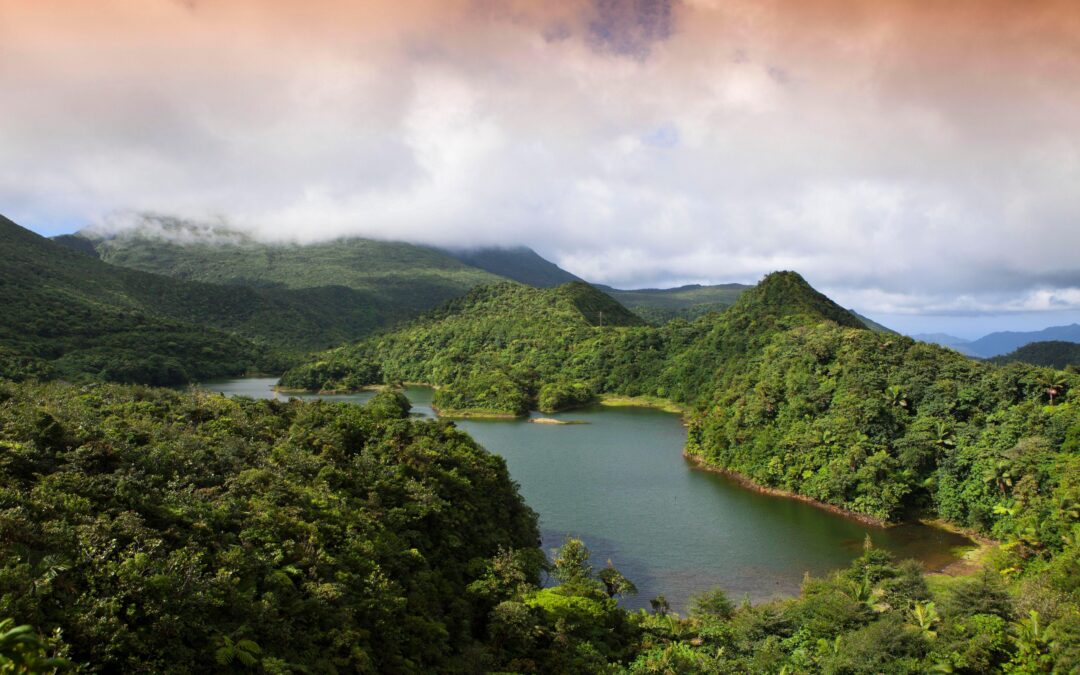
This small Caribbean island, known for its volcanic peaks, spectacular rainforests, vibrant biodiversity, world-class kayaking, and a culinary scene that reflects centuries of diverse influences, is considered a safe destination for travellers.
But Dominica is not your typical Caribbean holiday destination.
Sandwiched between Guadeloupe and Martinique in the eastern Caribbean, Dominica (not to be confused with the Dominican Republic) is home to the Kalinago, the Caribbean’s largest remaining Indigenous community, and a vibrant Creole culture shaped by centuries of African, French, and British influences—all set against a backdrop of pristine natural landscapes.
It’s also a place where the roads can be challenging, the weather unpredictable, and some of the most extraordinary experiences require a little planning and local knowledge. At karibu adventures, we’ve spent years getting to know Dominica, building relationships with local guides and communities, all of which has helped shape our eight-day Dominica hiking and adventure tour. Our firsthand experience has given us a deep understanding of how to navigate the island safely and with confidence. Below, we’re sharing what we’ve learned about staying safe, travelling responsibly, and making the most of a visit to Nature Island.
Is Dominica safe for tourists?
The U.S. Department of State currently classifies Dominica as Level 1: Exercise Normal Precautions, its lowest travel advisory level. The Government of Canada similarly recommends that Canadians take normal security precautions.
As with any destination, it’s best to avoid leaving valuables unattended, use licensed transportation, and exercise particular caution in isolated areas after dark. Of course, cautionary advisories can only tell you so much about a destination. Sometimes, it’s the unexpected encounters with locals that leave the largest impression. I experienced this firsthand on one of my visits to Dominica, when a rental car mishap left me stranded on a remote road.
The sun was setting when I somehow managed to get my rental car stuck in a deep concrete drainage channel. I was lost, I was losing the daylight, and I was starting to get nervous.
Then two local men emerged from the forest.
For the next two hours, they worked to free my car, even returning home to collect additional tools. When they finally succeeded, they refused to accept any payment.
That experience has stayed with me ever since. Not because it proves that nothing bad can happen in Dominica—crime is, after all, a risk anywhere you travel—but because it captures something important about the generosity and community spirit I’ve encountered on this island.
And it’s one of the reasons we keep coming back.
Is it safe to hike and explore Dominica’s natural attractions?
Dominica is a landscape unlike most in the world. But its geography also presents certain safety considerations, particularly for visitors planning to explore independently. Steep terrain, heavy rainfall, slippery trails, rapidly changing river conditions, and limited emergency access can make outdoor adventures more challenging. Here’s what to know:
Hiking and waterfalls

Dominica’s hiking opportunities are extraordinary, but not every trail is suitable for inexperienced hikers. One of Dominica’s most famous treks, Boiling Lake, is a demanding adventure through mountainous rainforest and volcanic terrain. The Government of Canada specifically advises visitors to explore Boiling Lake only with an experienced guide and to remain a safe distance from the water’s edge. We heartily agree. While the trek can be found on AllTrails, we would only advise taking this hike with an experienced guide, and certainly never alone.
Other popular experiences, including rainforest hikes and waterfall excursions, offer incredible vantage points of Dominica but should not be underestimated. Wear appropriate footwear, carry sufficient water, check weather conditions, and where possible, hire knowledgeable local guides for more challenging excursions.
On our eight-day Dominica adventure, we work with local experts who know the trails and help us explore the island responsibly.
Swimming, snorkelling, and diving

Dominica’s underwater landscapes are every bit as dramatic as those above the surface.
The Soufrière-Scott’s Head Marine Reserve offers spectacular opportunities to snorkel and dive among volcanic formations and colourful marine life. Dominica is also known for its resident sperm whales, which travellers can observe on responsible whale-watching tours that prioritize minimal disturbance to the animals.
While these incredible water activities across Dominica are generally safe, visitors should be mindful of strong currents and the absence of lifeguards at the vast majority of the raw, underdeveloped rivers, waterfall pools, and volcanic beaches.
For more ways to experience Dominica’s adventure-filled attractions, see our full Dominica travel guide.
Is Dominica safe during hurricane season?
Dominica lies within the Atlantic hurricane belt, making weather an important consideration when planning a visit.
The Atlantic hurricane season officially runs from early June through November, with the greatest activity typically occurring between August and October.
Dominica has experienced devastating storms, including Hurricane Maria in 2017, which caused extensive damage to homes, infrastructure, and forests. The island has since undertaken significant rebuilding and resilience efforts, but tropical storms do remain a consideration for travellers.
This is why karibu adventures only offers tours from late November to March, to avoid hurricane season and experience Dominica with optimal weather conditions.
If you’re visiting during hurricane season:
- Monitor forecasts from the U.S. National Hurricane Center.
- Choose travel insurance that covers relevant weather-related disruptions.
- Allow flexibility in your itinerary.
- Follow guidance from local authorities and accommodation providers.
- Avoid hiking, river activities, and exposed coastal areas during severe weather.
Dominica is also in a seismically active region, meaning earthquakes and volcanic activity are additional natural hazards to understand.
For official local emergency preparedness information, consult Dominica’s Office of Disaster Management.
Is Dominica safe for solo travellers and families?

Yes, Dominica is safe and can be a rewarding destination for solo travellers and families, particularly those who enjoy active travel and meaningful cultural experiences. English is the official language, making communication relatively straightforward for North American visitors, and the availability of knowledgeable local guides makes it easier to navigate the island’s rugged terrain and explore its natural attractions with confidence.
For families, the biggest considerations are often logistical. Excursions may involve winding mountain roads or physically demanding hikes, so choosing activities appropriate to children’s ages and abilities is key to a successful—and safe—trip.
For travellers looking for the local, expert experience, our Dominica small-group adventure is particularly well suited to solo travellers and families with older teens or adult children who are comfortable with active itineraries.
How to get around Dominica safely
Although the island is relatively small, its mountainous geography means journeys can take considerably longer than distances on a map suggest. Roads are often narrow, steep and winding, with sharp turns, limited lighting, and occasional landslide risks. Here are a few options to consider:
Renting a car
Renting a car offers flexibility, but there are two key factors to note: Vehicles travel on the left side of the road in Dominica and visitors need a temporary local driving permit in addition to their valid driver’s licence. These permits can typically be obtained through authorized car rental agencies, making the process relatively straightforward for visitors.
With that said, driving in Dominica is not easy. Very little of Dominica is flat, with narrow roads winding up and down the mountainous landscape, and much of the island has no street lighting, making nighttime driving especially difficult. Road conditions can also deteriorate following heavy rainfall, requiring a four-wheel-drive vehicle and experience.
It’s our personal recommendation to consider hiring a local driver to get around, but if you do move forward with renting a car, it’s important to bare the above in mind.
Taxis and private transfers
Licensed taxis are a convenient option for airport transfers and excursions. You can hire a taxi at both local airports or at most hotels and guesthouses, and official cars have special license plates starting with H, HA, or HB.
Travellers should note that taxis generally aren’t metered, so agree on the fare before setting off.
Ride Apps
Major global ride-hailing apps like Uber do not operate in Dominica. Instead, travellers can use local or regional ride-hailing alternatives like Ride Dominica and Allez.
Public transportation
Dominica has a network of privately operated minibuses connecting the capital Roseau with towns and villages around the island. They’re an affordable way to travel, although routes and schedules may be less convenient for visitors hoping to reach remote hiking trails or natural attractions.
Health and medical considerations
Dominica has hospitals and clinics, but medical facilities and emergency services are more limited than travellers may be accustomed to in North America.
Because access to emergency assistance can be especially difficult in remote mountain areas, we recommend purchasing comprehensive travel insurance that includes emergency medical treatment and evacuation coverage. In fact, at karibu adventures, medical travel insurance is required for guests joining our Dominica tour.
Are vaccinations required to visit Dominica?
Travellers arriving directly from the U.S. or Canada are not generally required to have any specific vaccinations to enter Dominica. However, proof of yellow fever vaccination may be required if you’re arriving from or transiting through a country where yellow fever transmission is a risk.
While yellow fever itself is not a risk in Dominica, travellers should ensure their routine vaccinations, including MMR (measles, mumps, and rubella) and hepatitis A and B, are up to date.
Before travelling, consult the U.S. Centers for Disease Control and Prevention or your healthcare provider for current vaccination and health recommendations. Bring any essential medications and a small first-aid kit, particularly if you’re planning outdoor activities.
Are there mosquitoes in Dominica?
Yes, mosquitoes are present in Dominica year-round, and travellers should take precautions against bites, particularly when spending time outdoors. Mosquito-borne illnesses, including dengue, chikungunya, and Zika, are potential health risks on the island.
To protect yourself, pack insect repellent containing DEET or picaridin, wear lightweight long sleeves and trousers when practical, and choose accommodation with screened windows or air conditioning. Mosquitoes can bite during the day as well as at night, so don’t save the repellent just for evenings.
In an emergency, dial 999 for local assistance.
Explore Dominica with karibu adventures

If your idea of the perfect Caribbean holiday involves a sprawling all-inclusive resort, endless beachfront loungers, and a schedule built entirely around poolside cocktails, there are other islands that may be a better fit.
Dominica asks a little more of its visitors. But the rewards are extraordinary.
Not only is Dominica generally safe for travellers, but you’ll discover an island where nature remains the main attraction, where food tells the story of the land, and where meaningful encounters with local people can become the most memorable part of a trip.
And one of the best ways to experience it is alongside people who know the island best. We work with knowledgeable local guides, prioritize responsible wildlife experiences, support community-led tourism, and dive into the land’s rich culinary traditions, offering a unique way of experiencing one of the Caribbean’s best-kept secrets.